Configured kit
Power
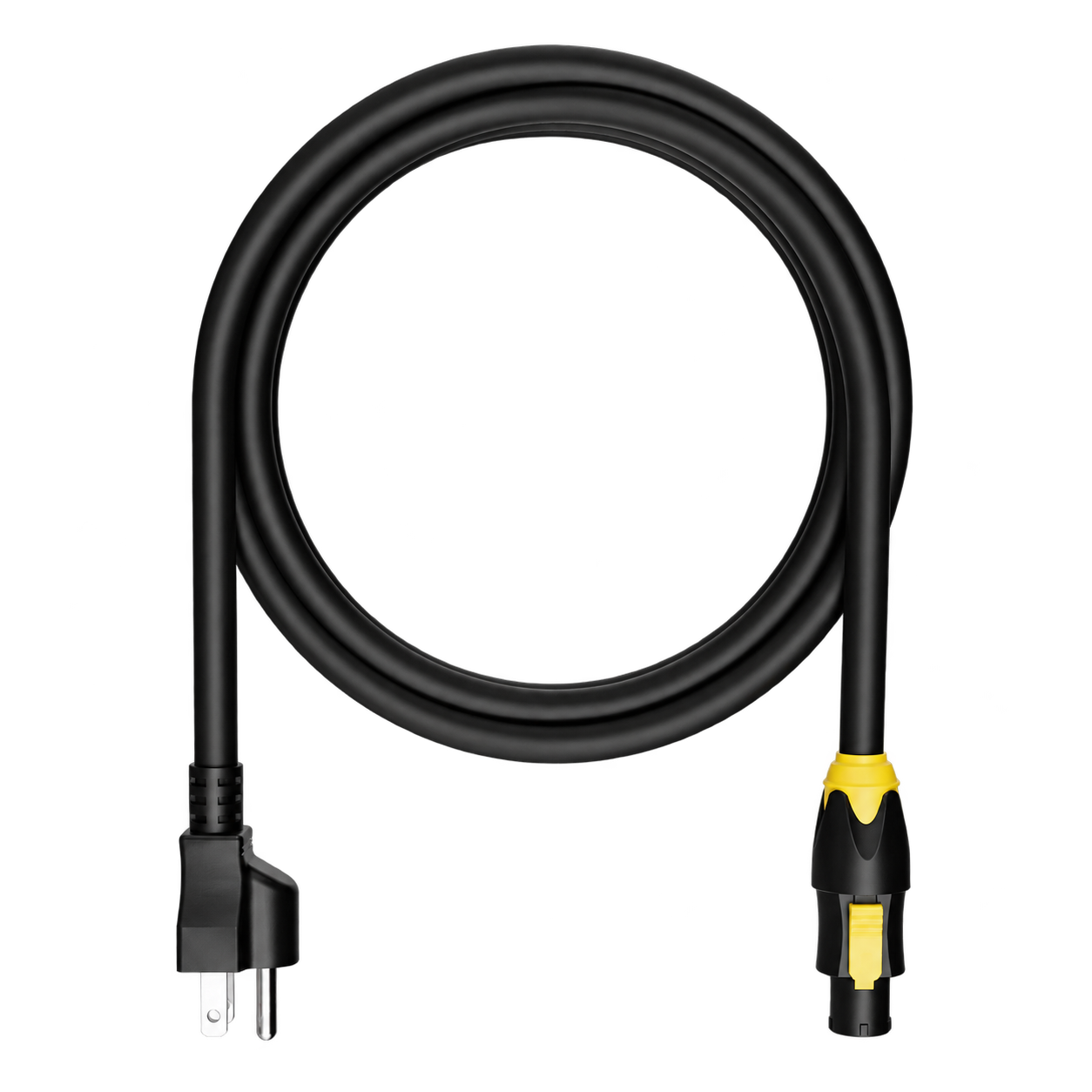
A power lead matched to the rack inlet and the regional plug agreed for your build. TRUE1 lead shown as a reference.

Utility rack · 4U
Four channels of Sennheiser wireless, on a straightforward analog patch.
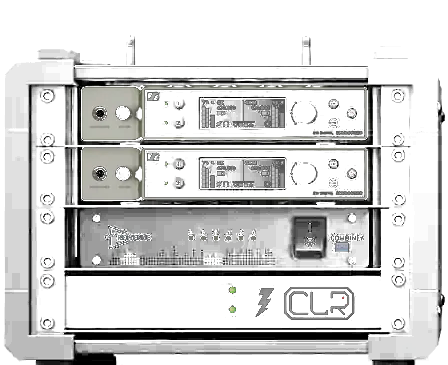
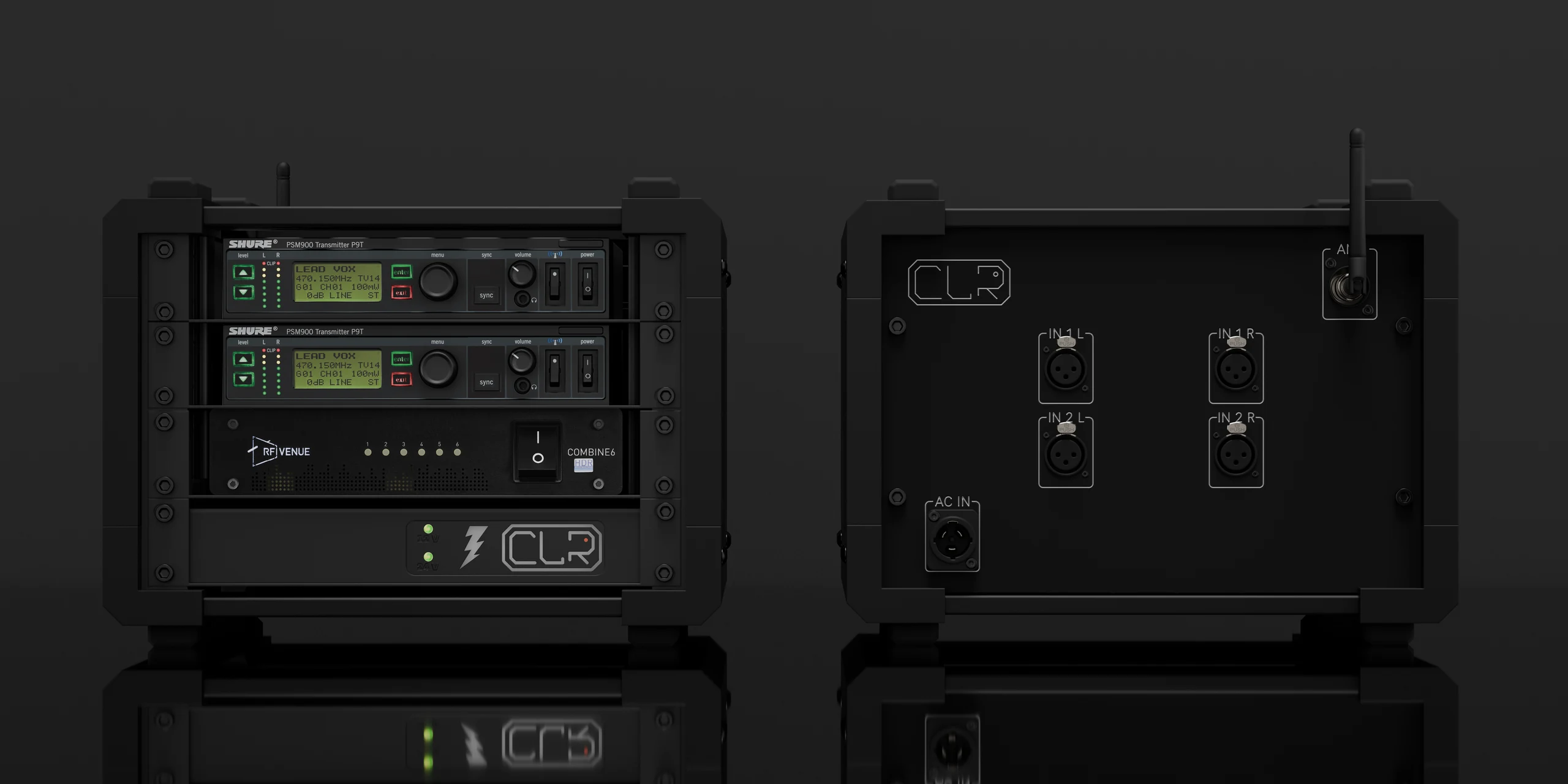
Shared receiver-front illustration. The correct rack-specific rear patch appears in How it connects.
The complete packing list
The rack hardware and the essentials that travel with it—configured for your system.
The reference build
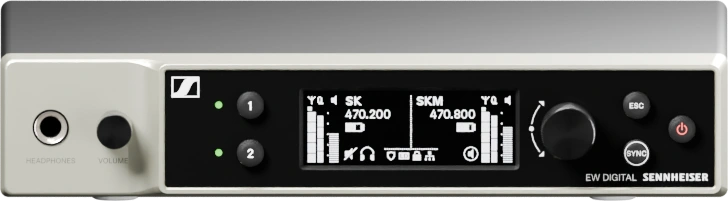
Two non-Dante dual-channel receivers provide four microphone channels with balanced analog outputs. The RF link is digital.
Rack-mounted power distribution and internal power wiring, specified for the installed equipment.
Also included: the CLR enclosure, fitted backplate, mounting hardware and internal power/signal patching for the agreed reference build. Product pictures identify the equipment family; final models and variants follow your quotation.
Ready to connect
Configured kit
A power lead matched to the rack inlet and the regional plug agreed for your build. TRUE1 lead shown as a reference.
Your configuration sets the packing list — The rack hardware is listed here. Microphone transmitters, capsules, bodypack receivers, earpieces, external antennas and batteries are supplied only in the quantities and regional variants agreed with your configuration. “Analog” describes the audio handoff, not the RF transmission. Receiver antenna distribution is selected with the build; no unconfirmed RF distribution model is included by implication. Travel bags and cases are optional transport choices, not included by default.
Technical specifications
Reference configuration: two Sennheiser EW-DX EM 2 dual-channel receivers in a 4U CLR rack, providing four balanced analog microphone outputs. Transmitters, frequency variants and the final patch are configured for your show.
Analog outputs, digital wireless: This configuration uses EW-DX EM 2 receivers without Dante, not analog-RF microphone receivers. Set the receiver output level to suit the destination input. Final rear-panel connections are agreed with the rack build.
Manufacturer references: EW-DX EM 2 specifications ↗ · Receiver audio connections ↗ · EW-DX system specifications ↗
Compatibility & touring regions
Match the EW-DX EM 2 receivers with compatible Evolution Wireless Digital handhelds or bodypacks in the correct frequency-range variant. An unrelated analog wireless transmitter does not become compatible simply because it tunes to the same frequency. Capsule mounts and bodypack microphone connectors must also match the selected transmitters.
Common EW-DX tuning variants include Q1-9 (470.2–550 MHz), R1-9 (520–607.8 MHz) and S1-10 (606.2–693.8 MHz). Other variants cover different regional windows. These are hardware tuning ranges, not a promise that every frequency is legal in every destination.
Choose receiving antennas and distribution for the same operating band, with cable loss and receiver requirements accounted for. Antenna bandwidth cannot extend a receiver’s tuning range.
Check current frequency permissions, licensing and radiated-power limits for every destination with the relevant local authority or RF coordinator. A venue scan and coordinated channel plan are still needed; a permitted band is not automatically clear of interference. No single variant is promised to cover every country.
Planning references: Receiver/transmitter compatibility guidance ↗ · International Frequency Advisor ↗
Plan your wireless configuration →Portable by design
4U reference format. Plan a protective Peli case around the complete build.
01 / Peli case

A fitted Peli case adds rigid protection, with an insert and accessory space planned for your complete rack.
Optional transport, configured to order. These drawings illustrate travel formats, not this rack’s exact insert or included accessories. Final packed dimensions and weight are confirmed with your build. Airline cabin acceptance depends on the carrier’s current rules.
The rear patch

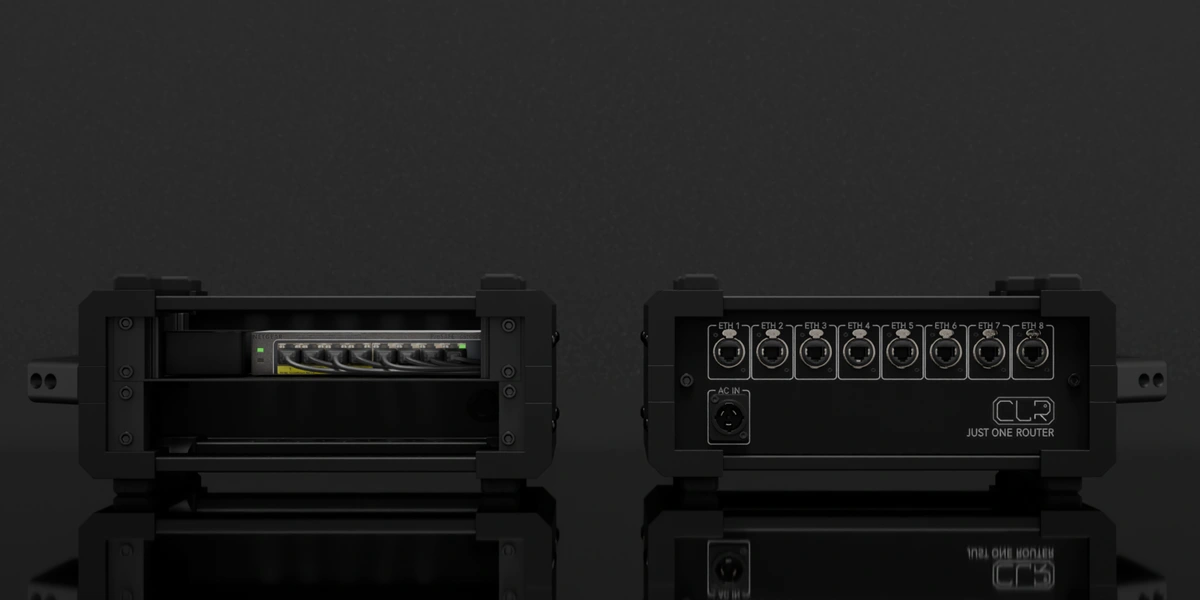
The drawing shows the reference connector layout, not every connection on each internal device. Final routing, cable types and regional equipment variants are confirmed for your build.
Suggested add-ons
Optional additions, not part of the packing list above. We confirm compatibility with your system.
Build yours
We’ll configure your Analog Wireless Mics around your specific needs.